

Electrical Panel Upgrade Rebate in 2026: What You Can Get
A homeowner in Chester County wants to add a Level 2 charger and a home battery. The existing 100-amp panel may not support the added load, and the electrician's quote includes a service upgrade the homeowner had not budgeted for. The practical question is which incentives can help with the equipment and related work.
Incentives generally attach to the equipment a panel enables, such as an EV charger or qualifying efficiency appliance. The panel is usually a supporting cost. Federal tax-credit rules for panel upgrades ended for property placed in service after December 31, 2025, so current options to check include utility EV programs, Pennsylvania's income-tested rebate rollout, and any federal charging-property credit that remains available.
Incentive | Amount | Who it reaches | 2026 status | Key condition |
|---|---|---|---|---|
Federal 25C panel credit | 30% of qualifying panel costs, capped at $600, under IRS and ENERGY STAR guidance | Homeowners pairing panel work with qualifying efficiency equipment | Ended for property placed in service after December 31, 2025 | At least 200-amp capacity, with the panel enabling qualifying equipment |
HEAR panel allowance, federal and state-run | Up to $4,000 for a panel, within a household package of up to $14,000, under ENERGY STAR's HEAR program details | Income-qualified households | Depends on Pennsylvania rollout and funding | Household income below 150% of area median income; panel work tied to a qualifying appliance |
Federal 30C charger credit | 30% of hardware and installation, up to $1,000, according to IRS guidance on the residential charging-property credit | Chargers in eligible census tracts | Verify current status before budgeting | Charging property must be in a low-income or non-urban census tract |
Pennsylvania utility EV charger credits | $100 to $300 in reported examples | Customers of participating utilities and co-ops | Varies by territory and year | Approved charger and any enrollment or control requirements |
The 25C panel credit was a tax credit, not a general payment for replacing an old panel. For qualifying improvements placed in service through December 31, 2025, it covered 30% of eligible panel costs, up to $600, and the work had to enable qualifying equipment.
The HEAR allowance may be larger, but Pennsylvania eligibility depends on state implementation and available funding. The federal program allows up to $4,000 for panel work within a household package of up to $14,000. Income limits and the qualifying appliance both matter.
Check a charger's eligibility separately. The federal charging-property credit has location restrictions, and its current status should be confirmed before it is included in a project budget.
Budget rule: Treat an incentive as unconfirmed until you have checked its current status, eligibility rules, and application timing. Compare any expected incentive with the project's likely cost, including the factors that affect an electrical panel upgrade.
Table of Contents
Which Panel Upgrades Qualify and Which Do Not
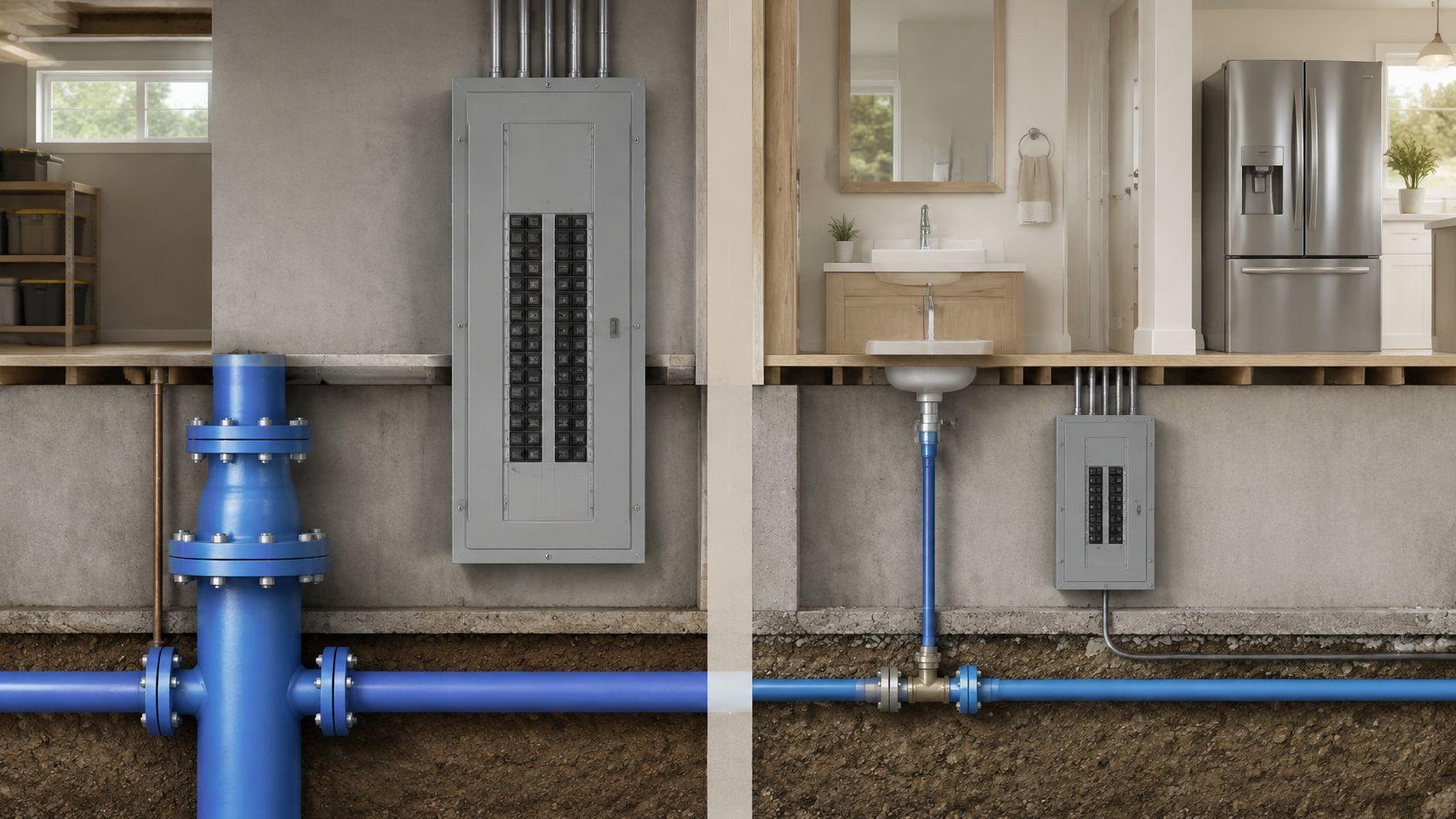
A panel is like the water main to a house. Replacing it with a bigger main doesn't earn a rebate by itself. The upgrade may become relevant when it supplies a new fixture the incentive is designed to support, but the program still decides whether that fixture and the related work qualify.
Federal panel-credit rules through 2025 tied eligibility to the equipment the panel enabled, along with installation and capacity requirements. State rebates can use different rules. A project that fits one program may not fit another, and an EV charger, battery, or generator shouldn't be assumed to qualify just because it needs more electrical capacity.
Panel upgrade case | Likely eligible? | Why |
|---|---|---|
Panel replaced only because it's old, rusted, or a known hazard | No under the former federal panel credit | No qualifying energy equipment is being enabled |
Panel upgraded so a Level 2 EV charger can run on a 240-volt, 40-amp circuit | Possibly, under utility or 30C rules | Eligibility depends on the charger program and location, not the panel alone |
Panel upgraded for a heat pump or heat-pump water heater | Possibly, under HEAR or former 25C rules | The enabled appliance may qualify, subject to program requirements |
Panel upgraded to support a Powerwall or other battery | Depends on program rules | Battery and panel eligibility can differ by program and state |
Panel upgraded to support a whole-house generator and transfer switch | Depends on program rules | Confirm the specific program covers the equipment and related work |
The distinction matters in a quote. If the panel is being replaced for safety or age, that's a legitimate electrical need, but it doesn't automatically make the work incentive-eligible. If new equipment is driving the upgrade, keep the load calculation and project scope clear. A residential electrical load assessment helps document which new loads the service must support.
For an EV-plus-battery home, don't rely on a general description such as “electrification upgrade.” The incentive follows the equipment named in the application and supporting paperwork. Make sure the documents identify what the panel enables, and verify that the program accepts that equipment.
Pennsylvania Utility Rebates for EV Chargers
A utility rebate may help pay for a charger or managed circuit, while the panel upgrade needed to support it remains a separate expense. Pennsylvania offers vary by service territory. One rural cooperative has offered $300 for a remotely controllable Level 2 charger connected to a utility-controlled subpanel; other utility examples include $100 and $150 credits. Payment may come as a bill credit or check. These examples apply only within each utility's territory. ENERGY STAR's guidance on making a home electric-ready
A Level 2 charger commonly requires a 240-volt circuit rated around 40 amps. If the home has an older or heavily loaded panel, an electrician may need to calculate whether the existing service can safely support the additional load. The calculation may show that a panel or service upgrade is needed, even if the incentive covers only the charger or managed circuit.
Keep the costs distinct: electrical work required for a safe installation, and the charger-related equipment or service a rebate may cover. Ask the electrician to itemize the charger, circuit, panel work, permits, and other project components. That makes it easier to see which expenses the program might reimburse.
First, confirm which utility or cooperative serves the address. Southeastern Pennsylvania has multiple service territories, so a neighboring household's offer may not apply. Before signing a quote, check that the program is open, confirm its approved-equipment and enrollment requirements, and ask whether demand-response participation is required. Verify available funding and whether approval must come before installation.
How Federal, State and Utility Incentives Stack
Money may stack where the rules allow it, but project costs don't automatically stack into the same eligible bucket. A program defines which work and costs it covers. The electrical service, feeder, permit, load calculation, or trenching may account for substantial project expense, while an incentive may apply only to the charger or another specific component.
Combination | Can both apply? | What decides it |
|---|---|---|
Federal 30C charger credit plus utility charger rebate | Possibly | Census-tract eligibility and the utility's written stacking rule |
HEAR panel allowance plus utility EV rebate | Possibly, program-dependent | State HEAR terms and whether the utility incentive has separate funding |
Former federal 25C credit plus state or utility rebate on the same panel cost | Usually not on the same dollars | Whether program rules permit using the same cost for both |
Federal incentive plus battery or generator incentive | Depends on program rules | Each program's equipment list and eligible cost base |
Ask each program administrator for its stacking rule in writing. Then keep one cost ledger that assigns each invoice line to a program, rather than assuming the same dollars can be claimed twice. A charger's location in an eligible census tract may affect the federal charger credit, while household income and state implementation determine access to HEAR.
Hypothetical: A $2,400 charger hardware-and-installation invoice in an eligible census tract would produce a $720 credit at 30%, below the $1,000 cap. If a $300 utility rebate also applies to that charger, the net charger cost would be $1,380 only if the utility's written rules allow both incentives. A separate $3,500 panel and service invoice remains outside those charger incentives, so it stays in full under this example.
The point isn't to assume that every program excludes the others. It's to get the rule for each combination before committing to work, then apply each benefit only to costs the program accepts.
How to Apply for a Panel Upgrade Rebate
A homeowner planning a 40-amp EV circuit and a battery may find the electrician's load calculation shows 120 amps of demand against an existing 100-amp service. That result helps explain why an upgrade is needed, but it does not make the panel itself eligible for a rebate. Incentives usually apply to equipment the panel enables, so confirm which program covers the charger or battery and what paperwork it requires.
Confirm the serving utility. Ask whether its EV-charger or panel program is open for 2026. Programs vary by address, so a neighboring utility's offer may not apply to your home.
Request a load calculation. Have a licensed electrician assess the existing service and added loads. Ask for the calculated demand and the panel or service rating, not just a quote recommending an upgrade.
Get an itemized written quote. Separate panel and service work from the charger or battery, permit fees, and trenching. Clear line items help identify costs a program may cover.
Submit any required preapproval or enrollment before work starts. The most common preventable loss is starting installation before approval required by the program. Confirm the sequence, then schedule the work.
Confirm the equipment. Check the program's approved-equipment list and record model numbers before ordering.
Arrange the permit and inspection. Have the electrical permit pulled and schedule the required inspection to document code compliance.
Complete installation and retain the sign-off. Keep the final inspection record with the project documents.
Submit the claim on time. Follow the program's deadline and include invoices, inspection records, and proof of payment.
Records That Prove Your Claim
Keep a file that ties each incentive request to the work performed, the equipment installed, and the costs paid. The records differ by claim type, so retain the documents that apply to your utility, state, or tax claim.
Document | What it proves | Issued by | Retain for |
|---|---|---|---|
Itemized invoice splitting panel, charger, and labor | Cost for each project component | Licensed electrician | As long as the applicable program or tax-return rules require |
Electrical permit and final inspection sign-off | The work was permitted and inspected for code compliance | Local building authority | As long as the applicable program or tax-return rules require |
Photo of panel label showing 200-amp rating and model | Panel capacity and equipment identification | Electrician or homeowner | As long as the applicable program or tax-return rules require |
Load calculation report | Why the service or panel upgrade was needed | Licensed electrician | As long as the applicable program or tax-return rules require |
Spec sheet and serial number of enabled equipment | Which equipment the panel supports | Equipment manufacturer | As long as the applicable program or tax-return rules require |
Utility preapproval or enrollment letter | Approval or enrollment before installation, when required | Serving utility | As long as the applicable program or tax-return rules require |
Proof of installation date and payment | When work occurred and that the cost was paid | Contractor and bank record | As long as the applicable program or tax-return rules require |
For a federal panel credit on qualifying work completed by the end of 2025, keep records showing code-compliant installation, the required panel capacity, and the related eligible equipment. Replacing an old service alone did not establish eligibility. The paperwork needed to connect the panel work to qualifying equipment.
Save digital and paper copies. Label each file with the project address and connect it to the invoice line it supports. Keep the records for the period required by the relevant program or tax-return rules. If those rules specify different periods, follow the longer one.
Confirm the Order Before You Book Work
A home with spare panel capacity may need only an EV charger. A 100-amp panel serving a charger and Powerwall calls for a load calculation and an itemized quote. An income-qualified household should check Pennsylvania's current HEAR status and whether panel work must support an eligible appliance.
For charger-only work, verify the utility rebate and whether the address meets the 30C census-tract requirement. For a panel serving added equipment, ask the electrician to separate panel, equipment, and labor costs. Check permit requirements using this permit guidance for panel replacement.
A site assessment can establish whether a service upgrade is needed and which costs belong on incentive applications. Amp'd Energy Solutions works on EV charger, Powerwall, generator, and service-upgrade projects in Southeastern Pennsylvania. Contact Amp'd Energy Solutions to discuss your project.
Comments