

Electrical Panel Upgrade Cost Breakdown 2026
A basic panel swap averages about $1,347, while a true service-capacity upgrade to 200 amps typically costs $1,500 to $4,500. Complex 400-amp or relocation projects can exceed $8,000 when utility coordination is required.
You may be looking at three quotes for what appears to be the same job, yet the prices differ dramatically. One electrician may be pricing a panel-for-panel replacement, while another has included a larger service entrance, a new meter base, grounding work, permits, inspection coordination, and utility disconnect and reconnect service.
That difference is the heart of the electrical panel upgrade cost question. The box mounted on the wall is only one part of the work. The final bill depends on how much capacity your home needs, whether existing conductors can be reused, where the meter and panel are located, and what your utility and local inspector require.
Table of Contents
Understanding the True Cost of Upgrading Your Electrical Panel - What a panel swap includes - Why the metal enclosure isn't the main cost
Pricing Tiers by Amperage and Service Capacity - The 100-amp decision - Why 200 amps is a common middle ground - When 400 amps makes sense
Breaking Down Labor Permitting and Utility Fees - The electrician's scope - The utility-side exposure
Future-Proofing for EV Chargers and Battery Backup - EV charging changes the planning conversation - Battery systems need more than an empty breaker space - Oversize now or expand later
Variables That Cause Quotes to Fluctuate - Access determines labor - Existing wiring can change the scope - Local requirements matter
How to Evaluate and Compare Contractor Estimates - Questions that expose a weak bid - Compare scope before price
Choosing the Right Electrical Partner for Your Home - Look for complete project ownership - Regional knowledge has practical value
Understanding the True Cost of Upgrading Your Electrical Panel
A panel replacement and a service upgrade aren't interchangeable projects. Replacing a damaged load center at the same amperage may involve disconnecting branch circuits, installing a new enclosure, moving breakers, labeling circuits, and completing required testing. Increasing the home's service capacity can require larger service conductors, a different meter arrangement, new grounding and bonding components, and approval from the utility.
That distinction explains why a low headline price can become a much larger invoice. Consumer pricing data consistently places ordinary residential panel work in the low thousands, while more involved projects rise substantially when the electrician must alter the service entrance, relocate equipment, or rebuild upstream components. HomeAdvisor's electrical panel upgrade cost guide also emphasizes that amperage, labor, permitting, and project scope shape the final price.
What a panel swap includes
A same-size replacement is generally the narrower assignment. The electrician removes the old panel, installs the new load center, reconnects existing circuits, checks conductor terminations, labels the breakers, and arranges the required inspection. That work can still uncover problems, including undersized conductors, damaged insulation, missing grounding connections, crowded raceways, or circuits that were never properly identified.
A service-capacity project starts with a different question: Can the entire electrical service safely support the proposed load? The electrician should calculate the expected demand from existing equipment and planned additions rather than choosing an amperage based only on the age or appearance of the panel.
Practical rule: A larger panel doesn't automatically create more capacity. The meter, service conductors, disconnecting means, grounding system, and utility connection must support the target service as well.
Why the metal enclosure isn't the main cost
The load center and breakers are visible, so homeowners naturally focus on equipment pricing. In practice, licensed labor, access, permitting, inspection corrections, service shutdowns, and utility coordination often account for much of the total. A panel mounted in an open garage is a different job from one buried in a finished wall with a long route to the meter.
A quote that excludes meter work or assumes the existing service conductors can remain may look attractive, but it may not describe a permitted capacity upgrade. Ask whether the proposal covers the complete path from the utility connection to the branch circuits inside the home. That question often reveals why two estimates are pricing different scopes.
Pricing Tiers by Amperage and Service Capacity
The target amperage is usually the largest single pricing variable. A home staying at 100 amps may need only a replacement panel, while a move to 200 amps can require a new service entrance. A 400-amp installation brings another level of complexity, particularly when the project includes multiple high-demand systems, major rewiring, or a service relocation.
The ranges below are planning figures, not guaranteed bids. They combine the verified consumer pricing ranges for common replacement and service-upgrade scopes, and the exact work still depends on the home's existing infrastructure. Published electrical panel replacement pricing shows why real-world projects can sit above simple national averages when capacity increases or extensive service work is involved.
Target amperage | Estimated cost range | Typical application |
|---|---|---|
100 amps | About $518 to $2,193 for a typical replacement or upgrade scope | Like-for-like replacement in a home whose calculated load remains within existing service capacity |
200 amps | About $1,500 to $4,500 for a standard capacity upgrade | Modern homes adding substantial appliances, an EV charger, heat-pump equipment, or backup power |
400 amps | About $4,000 to $12,000 when new service equipment and substantial rewiring are required | Large homes or properties with unusually heavy electric loads and complex service requirements |
The 100-amp decision
A 100-amp service isn't automatically unsafe or inadequate. If the home's calculated demand is modest and the wiring is in good condition, a replacement at the same rating may solve an obsolete or damaged panel problem without rebuilding the service entrance.
The mistake is treating a full breaker panel as proof of available capacity. A panel can have open spaces while the service remains unable to support a new charger, electric heating equipment, or other major load. A professional electrical load assessment should determine whether replacement, load management, or a service increase is appropriate.
Why 200 amps is a common middle ground
Moving from 100 amps to 200 amps often requires larger feeders, a meter-main combination or new meter equipment, grounding and bonding updates, permitting, and inspection. One verified cost guide places the amperage increase itself at $750 to $2,000, before extra wiring for additional circuits, while broader estimates put all-in 200-amp work higher when service-entrance components are included.
When 400 amps makes sense
A 400-amp service isn't a default upgrade for an ordinary home. It may be justified by a detailed load calculation involving electric space heating, multiple charging loads, extensive mechanical equipment, or a large property with substantial simultaneous demand.
Oversizing without a reason adds equipment and installation cost. Undersizing creates a bottleneck that may force another service project later. The correct target is the capacity supported by the calculated present and planned load, not the largest number a contractor can install.
Breaking Down Labor Permitting and Utility Fees
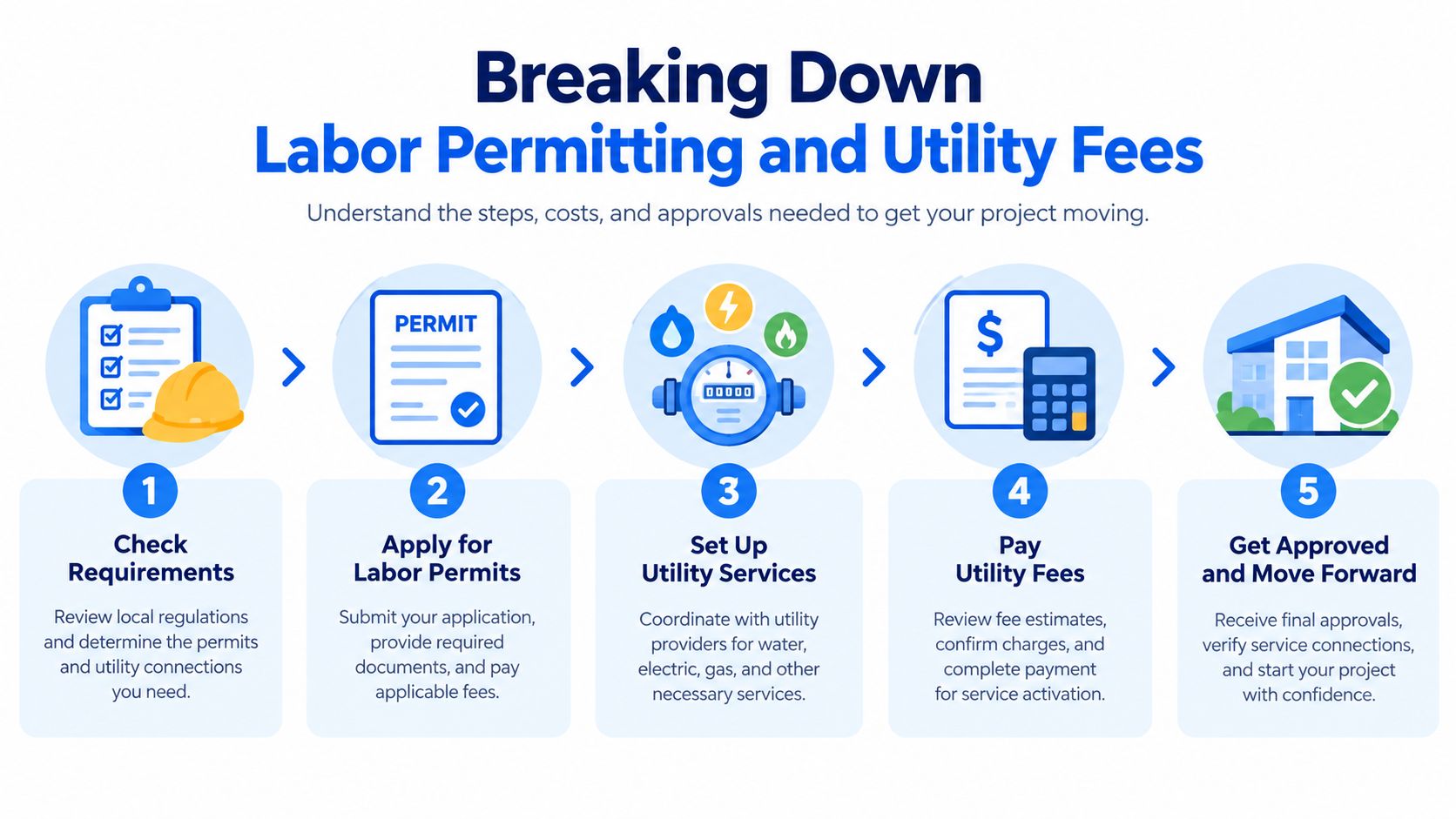
A professional estimate should make the division of responsibility visible. The electrician generally handles the physical installation, circuit reconnections, grounding work, permit application, inspection scheduling, and coordination with the utility. The utility may control the meter, service drop, transformer connection, and approval of the final service configuration.
Those scopes overlap, but they aren't the same. The electrician may install a new meter socket or service riser, yet the utility still has to disconnect and reconnect the service, inspect its equipment, or determine whether the incoming conductors can support the requested amperage. If that work isn't listed, ask who pays for it and who schedules it.
The electrician's scope
The installation quote may include several distinct tasks:
Site preparation: Protecting finished surfaces, opening access where necessary, and making the work area safe.
Equipment installation: Mounting the panel, installing breakers, replacing service conductors, and fitting the disconnecting equipment.
Grounding and bonding: Updating grounding electrode connections, bonding paths, and service equipment connections to meet applicable requirements.
Circuit reconnection: Extending or rerouting branch-circuit conductors when the new panel doesn't align with the old one.
Documentation and testing: Labeling circuits, checking terminations, arranging inspection, and correcting deficiencies identified by the authority having jurisdiction.
The permit fee itself may be modest compared with the labor, but skipping the permit isn't a legitimate way to control the electrical panel upgrade cost. Unpermitted service work can complicate insurance questions, future inspections, and resale disclosures.
The utility-side exposure
The utility may need to replace or modify the meter socket, service drop, service lateral, or related connection equipment. A service upgrade can also require a utility review before installation, a scheduled outage, and a final reconnection after inspection. Those steps create both direct charges and scheduling risk.
Ask the contractor to identify each item as included, excluded, or allowance. A quote that says “utility fees by owner” isn't necessarily wrong, but you need to understand the possible exposure before signing.
If a new EV charger is part of the project, also separate the charger installation from the service work. A home EV charger installation cost guide can help you ask whether the charger circuit, conduit route, disconnect, and required load-management equipment are included in the proposed scope.
Future-Proofing for EV Chargers and Battery Backup
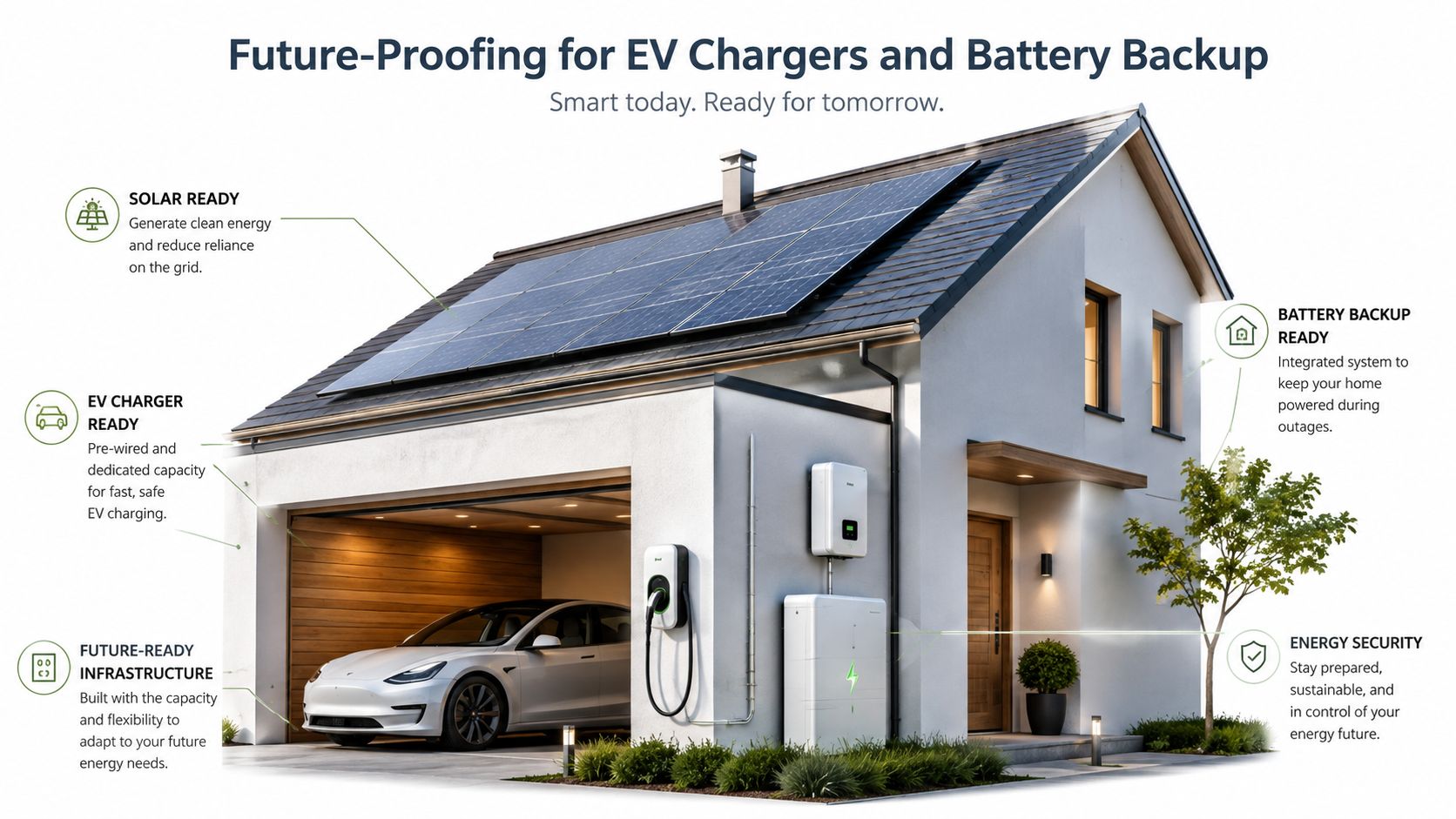
The smartest panel decisions begin with the equipment you plan to add, not just the equipment already operating today. An EV charger, battery storage system, heat pump, electric range, pool equipment, or whole-home generator can change the home's load profile and the way the service must be arranged.
That doesn't mean every homeowner should jump to the largest service available. It means the electrician should evaluate the combined plan before installing a panel that leaves no practical path for the next project.
EV charging changes the planning conversation
A Level 2 charger needs a properly sized branch circuit and a route that can carry the required load. The electrician must consider the service rating, available spaces, conductor path, disconnect requirements, and whether other large loads operate at the same time.
A home with one vehicle today may later have two charging loads, electric heating, or a workshop. A load calculation can show whether the service increase is necessary, whether managed charging can keep demand within the existing service, or whether the project should include a broader capacity upgrade.
Battery systems need more than an empty breaker space
Battery backup involves more than placing a breaker in the panel. The installation may require transfer equipment, backed-up load selection, equipment clearances, conductor routing, and coordination between the battery system and the home's service equipment. Whole-home backup can place different demands on the service than a smaller system intended only for selected circuits.
Before approving the panel work, decide what you want the backup system to do. A critical-load arrangement may protect refrigeration, communications, heating controls, and selected receptacles. A whole-home arrangement requires a more detailed assessment of starting loads and simultaneous operation. A home battery backup system cost guide can help frame that equipment decision separately from the service upgrade itself.
Oversize now or expand later
There are two legitimate strategies. You can build the service around a documented future load, or you can install an appropriate service today and use load management or a future subpanel when new equipment arrives.
Building everything at once may reduce duplicated access work, repeated permitting, and another service interruption. It can also increase the initial electrical panel upgrade cost if the larger service requires new feeders, meter equipment, or utility-side changes that you won't use for years.
A smaller project may be sensible when future plans are uncertain. The key is to leave a compliant path for expansion, reserve physical space where practical, and avoid paying for capacity that the load calculation doesn't support.
Variables That Cause Quotes to Fluctuate
Two houses can have the same target amperage and still require very different work. The panel location, meter position, construction type, conductor route, and utility rules determine how much time and material the installation needs.
The distance between the meter and panel is one of the clearest examples. A short, accessible route may allow a straightforward conductor replacement. A long route through a finished basement, crawlspace, attic, or exterior wall can require heavier cable, conduit, supports, fire stopping, and surface repair.
Access determines labor
An electrician needs safe working clearance around service equipment and a workable route for conductors. If the existing panel is behind drywall, inside a cramped closet, or in a location that no longer meets clearance requirements, relocation may be more practical than a direct replacement.
Relocation also creates secondary work. Existing branch circuits may not reach the new panel, so the electrician may need junction boxes, extensions, new raceways, or rerouted cables. Drywall, plaster, masonry, and exterior siding can add restoration work that a basic panel-swap quote doesn't include.
Existing wiring can change the scope
During the installation, the electrician may find aluminum conductors, deteriorated insulation, missing cable protection, crowded raceways, improvised splices, or circuits that aren't identified correctly. Those conditions aren't cosmetic. They affect whether circuits can be safely reconnected to the new equipment.
Grounding and bonding are common scope changes. A modern service configuration may require improvements to the grounding electrode system, bonding connections, or conductor sizing. These items can be difficult to price accurately without opening the equipment and inspecting the existing installation.
Local requirements matter
Utilities don't all use the same meter equipment, service entrance arrangement, or approval process. Municipal inspectors may also apply different requirements for panel location, working clearance, conduit, labeling, grounding, and service disconnect placement.
Material availability can affect scheduling and substitutions, while utility appointments can determine when the work can be energized. Ask the contractor whether the quote assumes standard equipment and whether a utility review has already confirmed the proposed service configuration.
A quote is only comparable when the contractors are pricing the same physical route, service rating, equipment scope, permit responsibility, and utility work.
Independent pricing summaries describe standard 100-amp-to-200-amp projects in the range of $1,500 to $4,500, while complex work involving meter bases, service entrances, relocation, or utility coordination can reach $7,500 or more. The residential panel upgrade cost analysis also cites a median single-family replacement cost of $3,500, with an interquartile range of $2,100 to $5,000, illustrating why a neighbor's price isn't a reliable benchmark for your property.
How to Evaluate and Compare Contractor Estimates
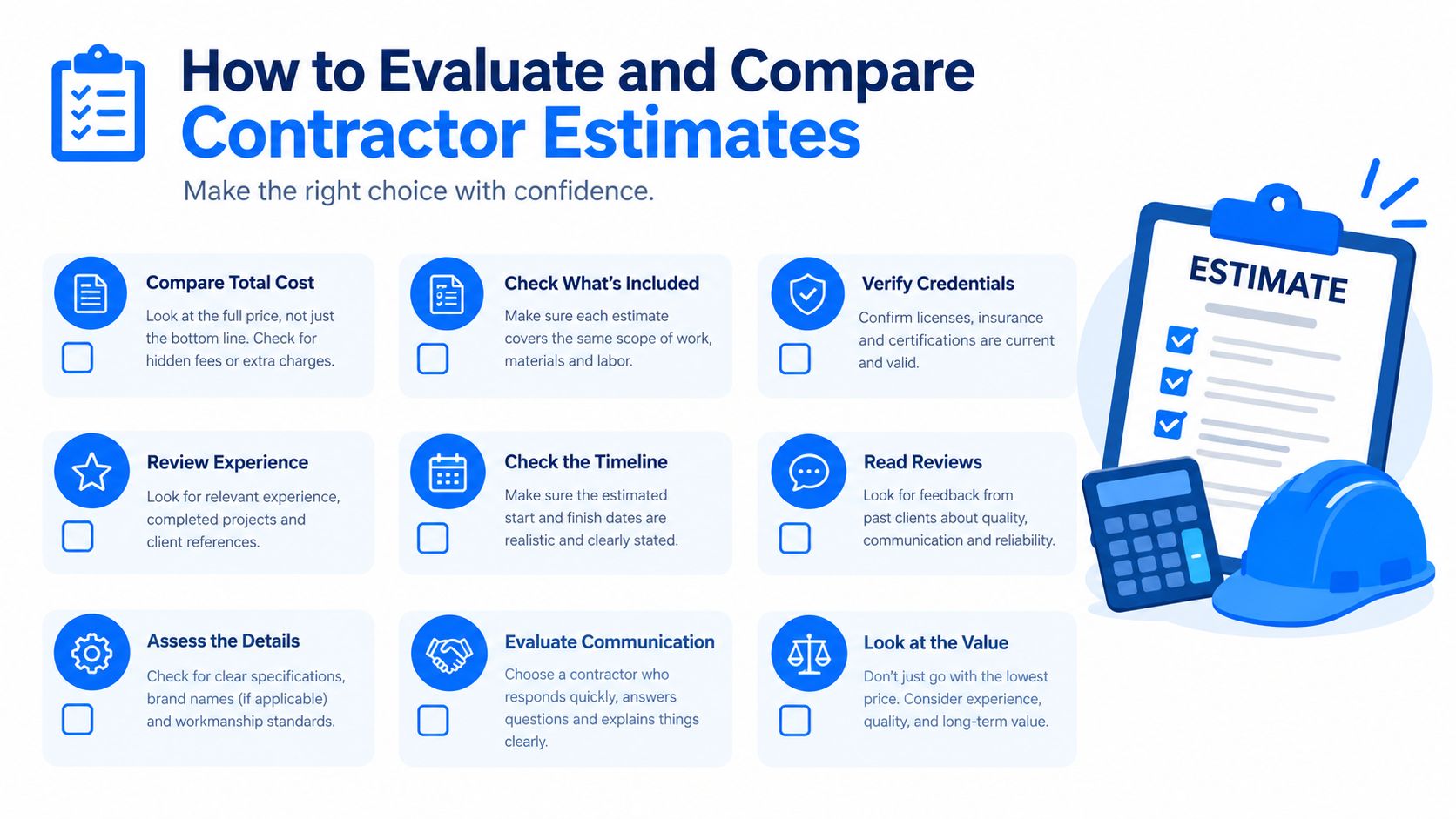
Start by putting every proposal into the same format. A single total doesn't tell you whether one contractor is cheaper or just leaving out the meter work, permit, inspection, circuit extensions, or finish repairs.
A sound estimate should identify the following items in writing:
Target service rating: The proposed amperage and the reason the load calculation supports it.
Panel equipment: The enclosure, main disconnect, breakers, surge protection if included, and any special equipment.
Service conductors: Whether the feeder, service entrance cable, riser, conduit, or meter connection will be replaced.
Grounding and bonding: The specific updates included and the treatment of existing grounding electrodes.
Permit responsibility: Who pulls the permit, pays the municipal fee, schedules inspection, and handles corrections.
Utility coordination: Who arranges the disconnect, meter pull, service approval, and reconnect.
Circuit work: Whether branch-circuit extensions, junction boxes, labeling, and corrections are included.
Restoration: Whether drywall, plaster, masonry, trenching, or paint repairs are excluded.
Questions that expose a weak bid
Ask each contractor to describe the complete path from the utility connection to the panel. Then ask what happens if the utility requires a larger service drop or if the inspector identifies an existing condition that must be corrected.
A reliable contractor won't recommend an amperage solely because it is common in newer homes. They should review the present load, planned EV charging, heating equipment, storage, generator connection, and any renovation that could add demand.
Be cautious if a bidder suggests bypassing permits, promises that utility approval isn't needed, or refuses to identify exclusions. You should also question a quote that assumes a panel can be upgraded without inspecting the meter base, service conductors, grounding system, and panel location.
Compare scope before price
The lowest number is useful only when it represents the same finished project. Have contractors state whether their price includes equipment, labor, permits, inspection, utility coordination, temporary service interruption, cleanup, and circuit labeling.
Get clarification before work starts, not after the old panel has been removed. A detailed written scope protects both sides and gives you a practical basis for deciding whether a capacity upgrade, a same-amperage replacement, or a staged solution fits the home.
Choosing the Right Electrical Partner for Your Home
A service upgrade is not a good project for a contractor who only wants to exchange the visible panel and leave the complicated coordination to someone else. The right electrical partner should be comfortable with load calculations, service equipment, local permitting, utility requirements, EV charging, and backup-power integration.
Look for a licensed and properly insured electrical contractor who will inspect the existing installation before giving a firm recommendation. Ask who will perform the work, who will communicate with the utility, and who will attend the inspection if corrections are required.
Look for complete project ownership
A strong contractor treats the upgrade as one capacity project. That includes evaluating your current service, selecting equipment that fits the calculated load, coordinating the outage, completing the installation, labeling the circuits, and confirming that the finished system passes inspection.
That approach matters even more when you plan to add an EV charger or battery backup. Keeping the service upgrade and future energy equipment aligned reduces the chance that one installer designs around assumptions made by another. It also gives you a clearer answer about whether the existing service needs to increase now or whether controlled expansion will work.
Regional knowledge has practical value
Utility rules and permit expectations vary by location. A contractor familiar with your municipality and service territory can identify meter requirements, clearance issues, inspection procedures, and scheduling constraints before installation day.
For homeowners in Southeastern Pennsylvania, Amp'd Energy Solutions handles electrical service upgrades alongside EV charger installations, battery backup systems, Tesla Powerwall projects, and whole-house generator integration. Their family-operated team can assess whether a property needs a panel replacement, a full service-capacity upgrade, or a coordinated plan for future loads.
Choose the contractor who explains the scope plainly, documents exclusions, and takes responsibility for the work from permit application through utility reconnect. Request a site assessment from Amp'd Energy Solutions to review your panel capacity, planned EV charging or backup equipment, and the complete upgrade path before you commit to a quote.
Before approving an electrical panel upgrade, ask for a written load calculation, a line-item estimate, and a clear separation between electrician work and utility-side charges. Amp'd Energy Solutions can evaluate your existing service and coordinate upgrades for EV charging, battery backup, or generator installation.
Comments