

Whole House Generator Installation Cost: A 2026 Guide
Whole house generator installation cost typically lands between $10,000 and $25,000 in 2026. The generator itself is only part of the bill, and fuel work, electrical upgrades, site preparation, and permits can push the final price far beyond the equipment sticker.
I've seen this happen repeatedly in older Pennsylvania homes. A homeowner gets excited about a generator advertised at a manageable price, then discovers that the house needs a new service connection, a longer gas run, a compliant mounting pad, or several inspections before the system can legally operate. The box on the truck is visible. The work required to make it safe and functional is where the quote changes.
The right question isn't, “How much does the generator cost?” Ask, “What will this property cost to convert into a reliable standby-power system?”
Table of Contents
What Whole House Generator Installation Cost Looks Like in 2026 - Why estimates spread so widely
The Generator Unit and What Drives Its Price - Capacity sets the equipment category
Why the Automatic Transfer Switch Is Its Own Line Item - What the ATS must match
The Installation Line Items That Add Up Unexpectedly - Read the quote line by line
Sizing the Generator to Your Home's Real Load - Build the load list properly
Why the Cheapest Unit Quote Is Rarely the Cheapest Project - Compare scope, not the headline
Questions to Ask Before You Sign a Generator Quote - First priority for sizing and equipment - Second priority for site work and permits - Third priority for labor and warranty - Fourth priority for timeline
What Whole House Generator Installation Cost Looks Like in 2026
Installed prices commonly span $10,000 to $25,000 in 2026. Some straightforward professional installations fall closer to $7,000 to $15,000, while broader market estimates place a typical installed average near $9,000. Those figures are useful only as a starting point. The HomeAdvisor generator installation cost guide shows how widely installed pricing can vary by equipment and project scope.
A mid-sized suburban home can land anywhere in that range. Square footage does not set the bill by itself. Electrical demand, fuel access, service capacity, trenching, mounting conditions, and local approval requirements determine the labor and materials. A smaller unit serving selected circuits may stay near the lower end. A larger system supporting central air, electric cooking, or several high-demand appliances moves the equipment and installation price upward.
Why estimates spread so widely
Regional labor rates affect the quote, but site conditions create the largest price gaps. In older Pennsylvania homes, these line items routinely turn an attractive equipment price into a much larger project:
Fuel distance: A nearby, adequately sized gas connection keeps the run simple. A distant connection can require new piping, trenching, pressure adjustments, or propane infrastructure.
Electrical service: An older panel may lack capacity, breaker space, or the equipment needed for a compliant transfer arrangement. Panel work can become a separate project.
Ground conditions: Sloped, rocky, wet, or difficult-to-access ground raises the work involved in building a stable pad and running buried lines.
Local approvals: Permanent standby systems generally require permits and inspections. Placement rules and scheduling requirements affect both labor and completion time.
A generator-and-hookup price is not a complete project quote. Require separate line items for the generator, transfer equipment, electrical modifications, fuel work, pad or site preparation, permits, inspections, and commissioning. That breakdown shows exactly what you are paying for and exposes the site-specific work that can double the sticker price competitors use to attract calls.
How a Standby Generator System Fits Together
A standby system has four connected jobs, and each one can create a separate installation charge. The generator produces electricity, the automatic transfer switch changes the power source, the load path carries that power into the home, and the fuel supply keeps the engine running.
The generator is the engine-driven power source. It burns an available fuel and produces electricity when utility power fails. Its outdoor location must provide adequate ventilation and clearance, while the foundation must remain stable instead of settling or shifting. Poor access or difficult ground can turn a straightforward placement into added site work.
The automatic transfer switch, or ATS, monitors utility power. During an outage, it disconnects the home from the grid and connects the electrical system to generator power. Once utility service returns, the ATS reverses the sequence. This prevents generator power from feeding back into utility lines and lets the system operate without someone manually switching equipment outside.
The load path carries generated electricity into the home. A design may serve the full electrical service or use managed circuits that give priority to selected loads. Wiring, breakers, panel configuration, grounding, and service equipment must all match the generator and the home's existing electrical arrangement. An older panel can make this connection more involved.
The fuel supply acts as the system's energy source. Natural gas installations need correctly sized piping and adequate pressure. Propane installations also require a tank, regulator, piping, and an approved location. The generator cannot provide reliable backup power if the fuel infrastructure cannot support its demand.
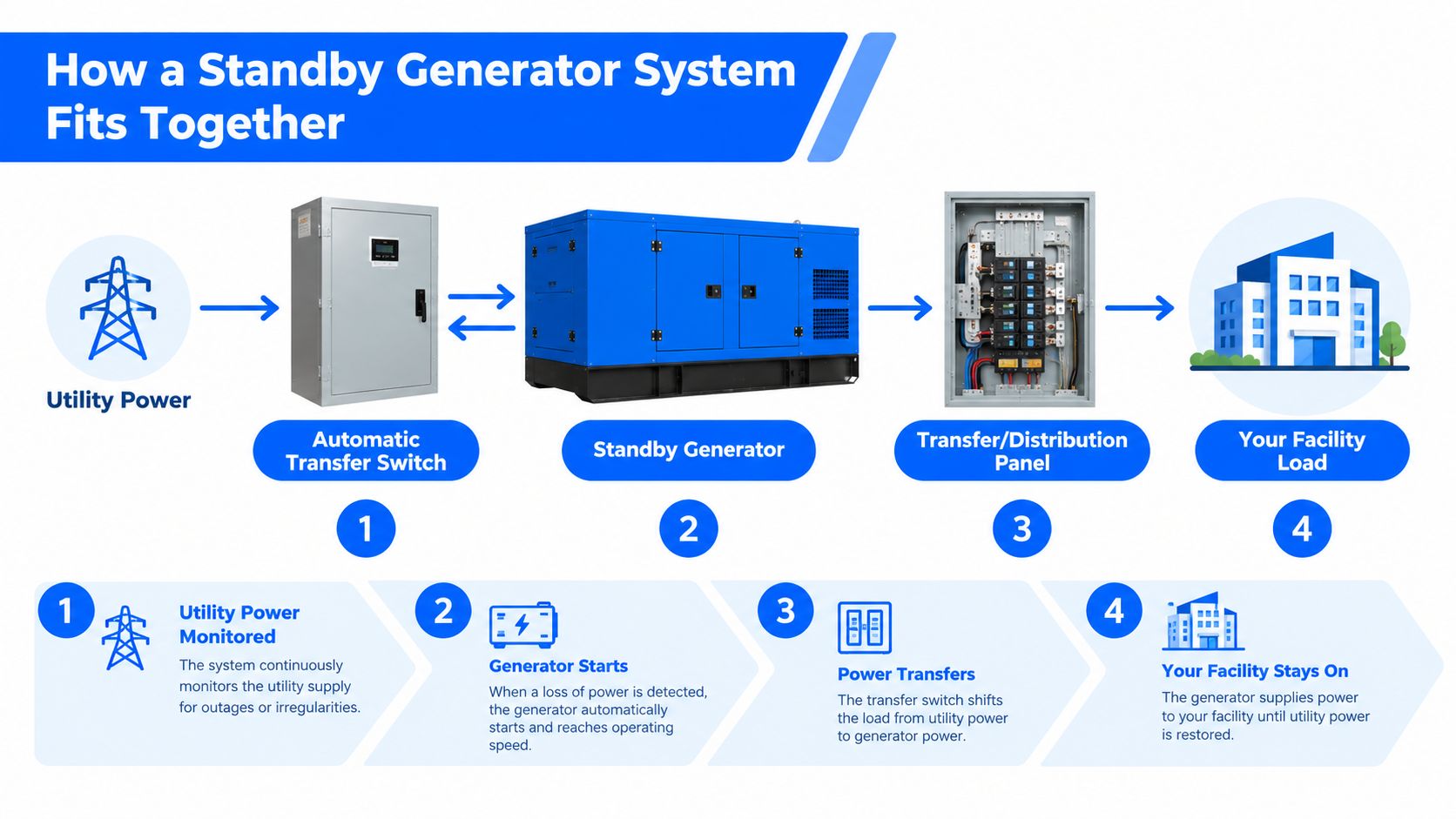
Practical rule: Require every quote to show which system component supports each charge. A single lump sum hides whether the proposal includes the ATS, fuel connection, panel work, site preparation, and final testing.
Installation cost follows this structure. The generator provides the source, the ATS controls the changeover, the electrical work delivers power, and the fuel and site work make the system usable at that property. A quote that omits any of those parts is incomplete.
The Generator Unit and What Drives Its Price
The generator alone can cost $3,000 to $51,900, according to this detailed generator cost breakdown from HomeGuide. That spread covers very different equipment categories, so a low unit price is not a reliable project estimate. In older Pennsylvania homes, the fuel run, service configuration, and starting loads often matter as much as the nameplate capacity.
House size is only a starting point. A home with gas heat and cooking may need far less generator capacity than a similar property with electric heat, electric water heating, several air-conditioning systems, or a well pump. Size from the actual electrical load, including the surge required when motors start.
Capacity sets the equipment category
Smaller air-cooled units can cover priority circuits such as refrigeration, heating controls, communications, lighting, and water systems. A larger air-cooled unit can serve more household circuits and handle heavier starting loads. Liquid-cooled equipment belongs on larger or more demanding projects, where capacity, enclosure construction, cooling, and service access justify the added cost.
Equipment category | Typical kW range | Unit-only planning range | What drives the spread |
|---|---|---|---|
Smaller residential system | 7 to 14 kW | $3,000 to $6,000 | Priority circuits, motor-starting demand, controls, and enclosure |
Mid-sized residential system | 15 to 24 kW | $6,000 to $15,000 | Whole-home coverage, larger starting loads, and equipment construction |
Larger residential or demanding property | 25 kW and above | $15,000 to $51,900 | Liquid cooling, higher output, managed loads, and commercial-grade construction |
These are equipment-only planning bands, not installed prices. The source's full range reaches $51,900 because generator capacity and construction can move a project far beyond ordinary residential equipment. Treat any quote that shows only a model and a price as incomplete.
Fuel choice adds another pricing decision. Natural gas is practical when the utility connection is close and the existing line can deliver the required volume and pressure. Propane works where natural gas is unavailable, but the tank, regulator, piping, and approved placement become part of the job. Diesel requires different equipment, maintenance, ventilation, and site planning, which can make it a poor fit for a typical home.
The whole-home generator installation overview explains why generator sizing belongs in the same discussion as transfer equipment and site conditions. Use that framework when reviewing proposals.
Ask the contractor to identify every load the proposed unit will support, show how motor-starting demand was calculated, and explain what happens when several large appliances run together. Do not pay for capacity you cannot connect to a specific load.
Why the Automatic Transfer Switch Is Its Own Line Item
The automatic transfer switch is a separate line item because it performs a different job from the generator. It monitors the utility supply, detects an outage, disconnects the home from the grid, and permits generator power to enter only after that separation occurs.
That switching sequence protects utility workers, the home's wiring, and the generator. A standby unit connected without the correct transfer equipment can create a dangerous backfeed condition and damage electrical equipment. The ATS also determines how power reaches the home, whether it serves the full electrical service or works with a managed-load arrangement.
What the ATS must match
The switch must match the generator, service arrangement, and loads the system will support. Residential installations may use 100, 150, or 200 amps, but the correct rating depends on the home's existing electrical service and the design approved for the installation. Do not accept a switch rating based only on the generator's nameplate.
For planning purposes, the ATS itself is commonly estimated at $600 to $1,200, with installation estimates ranging from $500 to $2,000. The HomeGuide generator cost reference presents these as general planning ranges, not a fixed price for every property. Wiring distance, service access, breaker space, and the condition of the existing equipment can move the actual quote well beyond the equipment cost.
The installer may need to run dedicated conductors between the generator and ATS, coordinate breaker space, add or modify a subpanel, and correct grounding or bonding problems. In an older Pennsylvania home, locating the switch can reveal electrical issues that were harmless under normal utility service but must be addressed before automatic backup power is connected.
The ATS is the safety and control point that makes automatic standby power possible. It is not a decorative add-on.
Your written quote should identify the ATS model or rating, state whether it is service-rated, list the included wiring, and show any excluded panel or grounding work. If the proposal only says “transfer switch included,” request the exact equipment and installation scope before signing.
The Installation Line Items That Add Up Unexpectedly
Six separate charges can sit between a generator purchase and a working backup system. The unit and automatic transfer switch are only the starting point. On older Pennsylvania homes, fuel routing, panel capacity, site access, and permits often determine whether the final installation stays close to the equipment quote or doubles it.
Start with pad and site preparation. The generator needs a stable base, proper clearance, drainage, and enough access for delivery and service. A straightforward pad on accessible ground is a different job from one requiring grading, rocky-soil work, difficult access, drainage changes, or relocation to meet clearance requirements.
The fuel connection can also change the price sharply. Natural gas piping must deliver enough fuel at the required pressure. Propane systems may require tank and regulator work. Long runs, trenching, hardscape removal, and new fuel infrastructure can turn a short connection into a major part of the quote. The ConsumerAffairs installation cost reference covers these project variables.
The electrical connection includes conductors between the generator, ATS, and panel, plus breakers, terminations, grounding, testing, and required service work. A full or undersized panel can require replacement equipment, a service-capacity increase, or load management. Review these electrical service upgrade considerations before accepting an allowance that says only “electrical work.”
Read the quote line by line
Line Item | Typical Cost Range | Notes |
|---|---|---|
Labor and installation | Project-dependent | Straightforward work costs less than long runs, difficult access, or systems above 20 kW. |
Automatic transfer switch | Equipment and installation listed separately | Confirm the switch rating, wiring, breaker work, testing, and any service-related exclusions. |
Fuel line installation | $500 to $2,000 or more | Distance, trenching, regulators, and fuel-source changes drive the spread. |
Site preparation and pad | $150 to $600 or more | Ground conditions, foundation type, drainage, and access affect the final charge. |
Panel upgrade | Project-dependent | The existing service may lack capacity or suitable equipment. |
Permits | $80 to $500 | Electrical, fuel, mechanical, and inspection requirements vary by jurisdiction. |
These charges stack quickly. A complex project can exceed $55,000, according to the ConsumerAffairs whole-house generator cost guide. That is why a low equipment price says little about the installed total. Require each line, allowance, exclusion, and permit responsibility in writing.
Sizing the Generator to Your Home's Real Load
Generator sizing is the most important decision you can control before signing a contract. Square footage is only a rough clue. The key question is which appliances must run together and which devices create a heavy starting surge.
Begin with a written list of required loads. Include refrigeration, heating equipment, sump or well pumps, medical equipment, communications, lighting, cooking, water heating, air conditioning, and any workshop or business equipment. Separate loads you need continuously from loads you can manage or leave off during an outage.
Build the load list properly
Record the running demand shown on each appliance label or manufacturer specification. Then identify starting demand for motors and compressors. A refrigerator, pump, furnace blower, and air-conditioning compressor may draw more power during startup than they use after reaching operating speed.
A licensed installer should explain whether the design uses:
Whole-service backup: The system is designed around the home's service and intended loads.
Managed loads: Controls prevent selected high-demand equipment from operating simultaneously.
Essential circuits: The system prioritizes a defined group of critical circuits.
Starting-load controls: Equipment such as soft-start devices may reduce the demand created by motors and compressors.
Add a reasonable design margin after accounting for running and starting demand. The exact margin should be shown in the contractor's calculation, not hidden inside a model recommendation.
Ask for the load calculation, not just the proposed generator size. A number without the worksheet is a sales answer, not an engineering explanation.
Oversizing ties up money in equipment the home may rarely need and can complicate fuel planning. Undersizing creates nuisance trips when a compressor starts or several large loads overlap. The best quote tells you what the generator can run, what it will shed, and why that choice fits the electrical service.
Why the Cheapest Unit Quote Is Rarely the Cheapest Project
A cheap generator price can be a good deal, but it isn't proof of a cheap installation. Contractors sometimes advertise the equipment aggressively and leave the site-specific work vague. The homeowner then discovers that the low number assumed a short fuel route, an adequate panel, easy access, and no unusual permit or foundation requirements.
Consider two generic proposals. The first offers a lower-priced unit but excludes a long gas route, service work, and local approvals. The second lists a more expensive unit but includes a short connection, a suitable existing panel, complete site work, and commissioning. The second proposal can produce the lower total even though its equipment line starts higher.
Compare scope, not the headline
Line Item | Low Unit Quote Scenario | Higher Unit Quote Scenario |
|---|---|---|
Generator | Lower equipment price | Higher equipment price |
Fuel route | Long run, possible trenching, and additional gas work | Shorter route with existing access |
Electrical service | Panel or service upgrade may be excluded | Existing service is verified as adequate |
Site work | Pad relocation or ground preparation may be extra | Suitable location and base included |
Permits and startup | Scope may be unclear | Permits, inspection coordination, and commissioning identified |
Final project cost | Can rise sharply after site conditions are added | May remain closer to the written proposal |
The most common inflation points are predictable. Long fuel routes across driveways or hardscape require more labor. Full panels create subpanel or rewiring decisions. Clearance rules can force the generator to a different location. Township inspection schedules can add coordination and delay.
Don't compare a bare equipment quote with a complete installation quote. Compare the generator, ATS, electrical work, fuel work, site work, permits, and startup on both proposals. If you want to evaluate a different backup approach for selected loads, review battery backup solutions, but use the same discipline: compare the installed system, not the product sticker.
Questions to Ask Before You Sign a Generator Quote
Take these questions to every site visit. A serious installer should answer them directly and put the answers in writing.
First priority for sizing and equipment
What load calculation produced this generator size? Ask for the worksheet and confirm that running loads and motor-starting demand were considered.
Which circuits will operate during an outage? Require a written list, especially for air conditioning, pumps, electric cooking, heating, and medical equipment.
What transfer switch is included? Confirm its service rating, compatibility, location, and whether the proposal includes its wiring and installation.
What happens when two large loads start together? The contractor should explain load management, sequencing, or starting-load controls if they are needed.
Second priority for site work and permits
How far is the fuel route assumed to be? Have the proposal state the assumed distance and identify who pays if trenching or hardscape removal becomes necessary.
Can the existing gas meter, regulator, and piping support the added demand? Don't accept “the line is already there” as proof of adequate capacity.
What pad is included? Confirm the pad type, ground preparation, drainage, clearances, and responsibility for any grading.
Who pulls each permit? Ask whether electrical, fuel, mechanical, zoning, and inspection coordination are included.
Third priority for labor and warranty
Is panel work included or priced as a contingency? Require separate pricing for a service upgrade, panel replacement, subpanel, or load-management equipment.
Who performs startup and commissioning? The quote should identify testing, transfer operation, load verification, and owner instruction.
What warranties apply to equipment and workmanship? Ask who handles warranty calls and whether labor is covered separately from the generator.
What maintenance is expected? Get the service schedule and clarify whether maintenance is included in the installation price or billed separately.
Fourth priority for timeline
What must happen before installation begins? Confirm utility coordination, permit approval, fuel work, pad construction, and equipment delivery.
When will the system be tested under load? A generator that starts is not necessarily a generator that transfers and carries the home's intended loads.
What could change the price? Ask the contractor to list every allowance and exclusion before you sign.
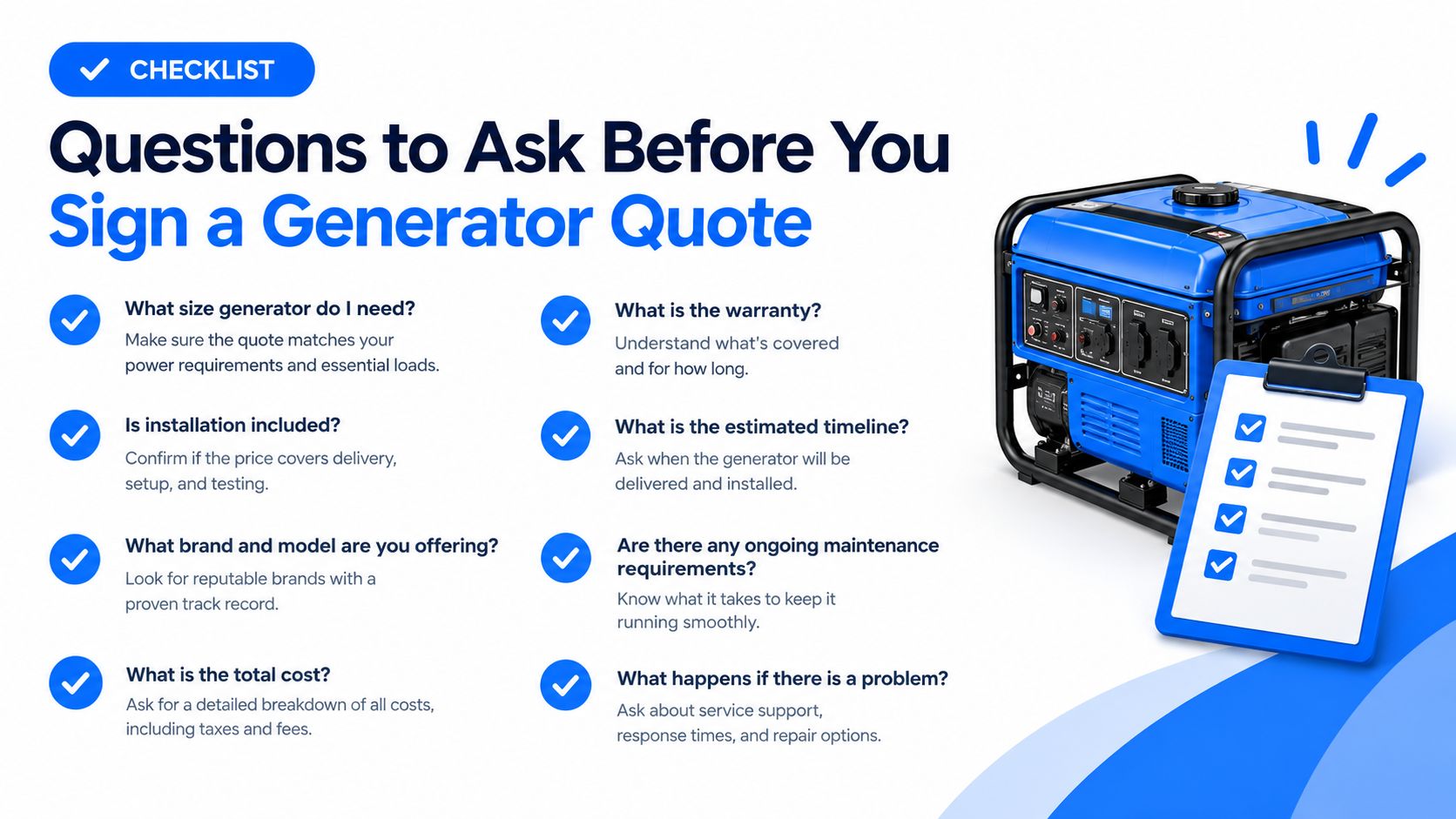
Require a line-itemized written quote. Reject any proposal that combines equipment, fuel work, electrical work, site preparation, permits, and commissioning into one unexplained lump sum. You don't need the lowest number. You need a price that reflects the actual conditions at your house.
Amp'd Energy Solutions can assess generator sizing, automatic transfer integration, service capacity, and the electrical upgrades that often determine whole house generator installation cost in Southeastern Pennsylvania. For a site-specific evaluation and a written scope that separates the actual line items, visit Amp'd Energy Solutions.
Comments